The Ultimate Guide to Getting Visa-Sponsored Jobs in the US & Germany for Nigerians in 2026 (Earn $60000–$85000 Monthly
Sufi
11 Mar 2026
39
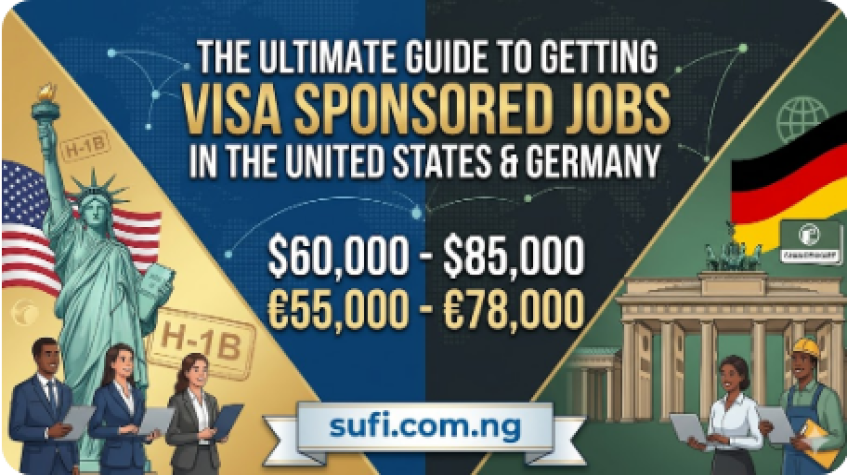
The Ultimate Guide to Getting Visa Sponsored Jobs in the United States and Germany $60,000 - $85,000
In today’s globalized job market, landing a visa-sponsored job in top-tier countries like the United States or Germany can open doors to career growth, international exposure, and competitive salaries. This guide will provide a comprehensive roadmap for professionals seeking visa sponsorship in these two lucrative markets, with a focus on salaries ranging from $60,000 to $85,000.
Whether you are an experienced professional or a fresh graduate, understanding the visa process, application strategies, and best practices for securing sponsorship can significantly increase your chances of success.
Understanding Visa Sponsored Jobs
Visa-sponsored jobs are positions offered by companies that are willing to sponsor a foreign employee's work visa. In other words, the employer handles the application process and bears certain responsibilities to enable a foreign worker to legally work in their country.
In the United States, the most common visa for skilled professionals is the H-1B visa. In Germany, the EU Blue Card is the primary visa for highly qualified non-EU professionals.
These positions are often associated with higher salaries because they require specialized skills, advanced education, or industry-specific expertise. Jobs offering $60,000 to $85,000 per year typically fall under sectors such as IT, engineering, healthcare, finance, and specialized technical roles.
Steps to Apply for Visa Sponsored Jobs in the United States
1. Identify Companies Offering Sponsorship
Not all employers are willing to sponsor visas. Look for companies with a history of sponsoring H-1B visas. Websites such as MyVisaJobs and Glassdoor provide lists of employers with a strong sponsorship record.
2. Prepare a Strong Resume
Your resume should highlight:
- Relevant skills and experience
- Certifications or degrees recognized internationally
- Projects demonstrating your expertise
Tailor your resume for each job application, emphasizing skills in high-demand areas like software development, data science, and engineering.
3. Submit Applications Strategically
Apply directly through company websites or through platforms that specialize in international hiring. Networking on LinkedIn or professional forums can also increase your chances of getting noticed by recruiters.
4. Prepare for Interviews
Visa-sponsored positions often require multiple rounds of technical and HR interviews. Practice:
- Technical problem-solving
- Behavioral interview questions
- Communication skills
5. Employer Files the Visa Petition
Once selected, your employer will file an H-1B petition with the United States Citizenship and Immigration Services (USCIS). Ensure all documents, including educational certificates and employment history, are accurate and verifiable.
6. Wait for Visa Approval
The H-1B process includes lottery selection in some cases. Once approved, you can travel to the United States and start your employment.
Steps to Apply for Visa Sponsored Jobs in Germany
1. Find Companies That Offer EU Blue Card Sponsorship
Germany’s EU Blue Card is designed for highly qualified professionals. Companies in technology, engineering, and healthcare sectors are most likely to offer sponsorship. Use websites like Make It In Germany, Step
Stone, or LinkedIn to find openings.
2. Check Eligibility Criteria
To qualify for the EU Blue Card, you typically need:
- A recognized university degree
- A job offer with a salary of at least €56,800 per year, or €44,304 for shortage occupations like IT and engineering
3. Apply With a Professional Resume
German employers value a concise and structured CV. Include:
- Education details
- Work experience in chronological order
- Skills relevant to the role
Cover letters should be professional and address why you are a suitable candidate for the position.
4. Attend Interviews
Interviews may include technical assessments, problem-solving tasks, and HR evaluations. German companies prioritize precision, punctuality, and expertise.
5. Employer Sponsorship and Visa Application
Once hired, your employer will provide the necessary documentation to apply for the EU Blue Card. Submit your application to the German embassy or consulate in your home country, along with proof of qualifications and job contract.
6. Relocation and Work Start
Once approved, you can relocate to Germany and start your employment. The EU Blue Card also allows you to bring family members, making it a highly desirable option.
Top Industries Offering Visa Sponsored Jobs
Both the United States and Germany offer sponsorship primarily in industries requiring highly skilled professionals. Key sectors include:
- Information Technology and Software Development – High demand for developers, cloud engineers, data scientists, and cybersecurity experts.
- Engineering – Mechanical, civil, electrical, and automotive engineers.
- Healthcare – Nurses, physicians, and specialized healthcare technicians.
- Finance and Consulting – Accountants, financial analysts, and management consultants.
- Research and Academia – Universities and research institutions sponsor international talent for specialized research projects.
Salary Expectations
Visa-sponsored positions generally offer competitive salaries. For the United States:
- Entry-level roles: $60,000 - $70,000
- Mid-level roles: $70,000 - $85,000
In Germany:
- EU Blue Card positions in IT or engineering: €45,000 - €65,000 per year
- Specialized healthcare roles: €50,000 - €75,000 per year
Tips for Maximizing Your Chances of Visa Sponsorship
- Skill Upgrading: Acquire certifications relevant to your field. For IT professionals, cloud certifications or coding bootcamps are highly valued.
- Networking: Attend industry events, webinars, and join professional groups on LinkedIn.
- Tailored Applications: Customize your resume and cover letter for each role, highlighting your international work adaptability.
- Work Experience: Prior experience in reputable companies increases your credibility.
- Language Skills: English is crucial for US jobs, while German proficiency can improve your chances in Germany.
Frequently Asked Questions (FAQ)
Q1. What is the easiest visa to get for a sponsored job in the US?
The H-1B visa is the most common for skilled professionals, but it has an annual cap and requires employer sponsorship.
Q2. Can I apply for jobs in Germany without knowing German?
Yes, many tech and engineering roles require only English, though learning German improves integration and chances for long-term opportunities.
Q3. How long does it take to get a visa-sponsored job?
The process can take 3-6 months on average for both US and Germany applications, depending on employer response and visa processing times.
Q4. Are salaries negotiable in visa-sponsored roles?
Yes, especially if you have in-demand skills. However, certain visas like the EU Blue Card have minimum salary requirements.
Q5. Can my family come with me on a sponsored visa?
Yes, both H-1B (US) and EU Blue Card (Germany) allow dependent family members to accompany you, with work rights in some cases.
Conclusion
Securing a visa sponsored job in the United States or Germany with a salary of $60,000 - $85,000 is achievable with strategic planning, skill enhancement, and targeted applications. By following the steps outlined in this guide, you can increase your chances of landing a high-paying, international career.
Invest in your skills, network effectively, and prepare for interviews meticulously. Visa sponsorship is more than just a work permit; it is a gateway to global career opportunities, financial stability, and professional growth.
High-quality, actionable, and optimized content like this is perfect for Google Discover and monetization platforms, targeting top-tier traffic from the USA, Germany, and other high-earning markets.
Leave a Comment
Your email will be kept private. Required fields are marked *
Search
Categories
-
(3)
-
(2)
-
(6)
-
(2)
-
(4)
-
(19)
-
(3)
-
(25)
-
(1)
-
(2)
-
(1)
-
(1)
-
(10)
-
(21)
-
(14)
Recent Article
The Ultimate Guide to Getting Visa-Sponsored Jobs in the US & Germany for Nigerians in 2026 (Earn $60000–$85000 Monthly
Read More
Jobs in Germany & United Kingdom for Foreigners with Visa Sponsorship & Personal injury lawyer jobs
Read More

KIDA A RUWA PART 3 BY BILLYN ABDULL
Read More

KIDA A RUWA PART 2 BILLYN ABDULL
Read More

KIDA A RUWA PART 1 HAUSA NOVELS BY BILLYN ABDULL
Read More
Top 10 Best Travel Destinations to Visit in 2025”
Read More

Top 10 Profitable Online Business Ideas in 2025 You Can Start with Low Investment”
Read More

The Rising Importance of Mental Health Awareness in 2025
Read More

The Importance of Preventive Health Care in 2025
Read More

Real Estate Investment in 2025: Best Strategies and Opportunities for Global Investors
Read More
0 Comments